


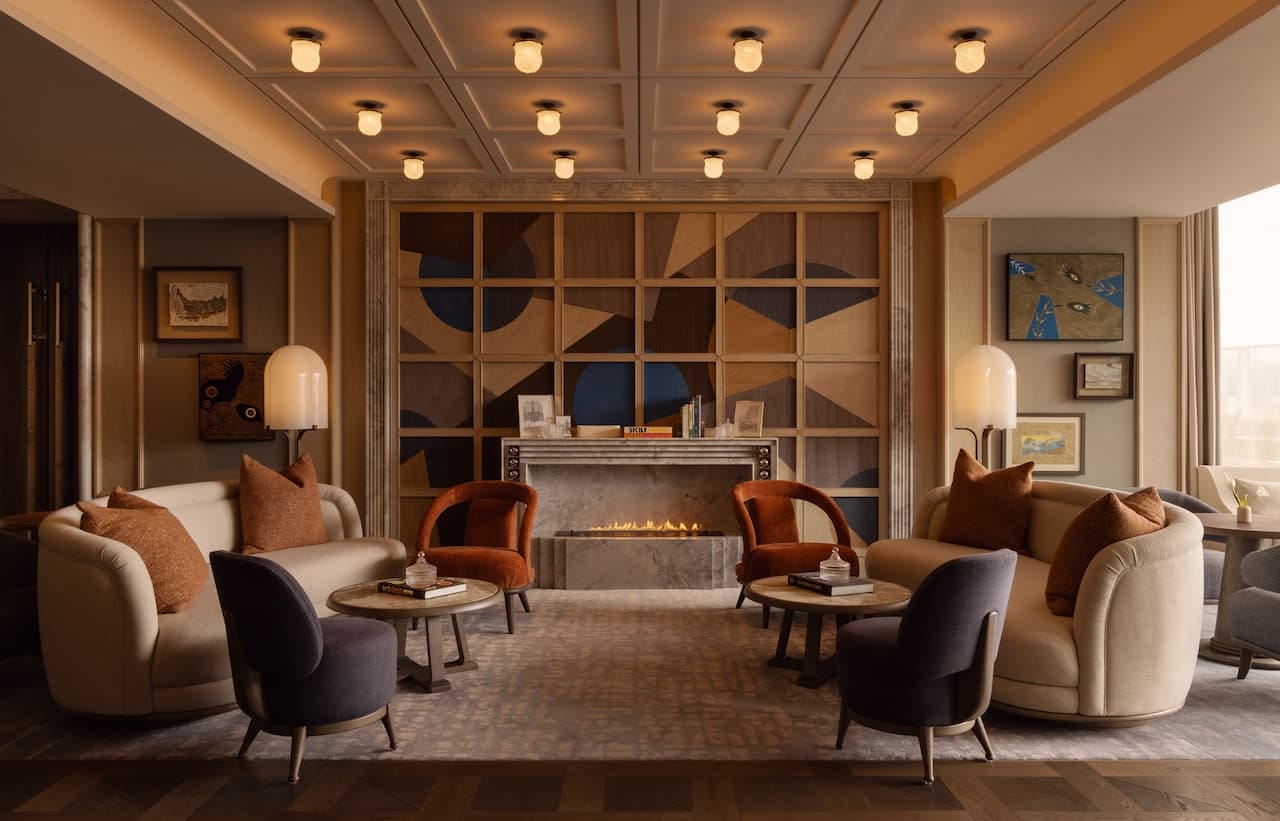
Close your eyes for a moment and think of a room you’ve experienced that you absolutely loved. Not because it was beautiful, but because you wanted to stay.
What do you remember?
Most of us begin with the visible details. The fireplace. The books. The generous windows or the comfortable chair tucked into the corner. But if you look a little deeper, those objects don’t fully explain why the room stayed with you.
Perhaps it felt calm. Or there was a sense of welcome. Maybe it invited you to settle in and lose yourself in a book, or linger in conversation long after you intended to leave. Whatever the feeling, the room seemed to possess a quality that was greater than any one attribute.
THAT QUALITY IS ATMOSPHERE
That feeling isn’t imagined. Research in environmental psychology has shown that we begin evaluating an environment almost immediately, processing cues like openness, enclosure, proportion, and complexity before consciously evaluating individual design elements. The Approach-Avoidance Model, developed by Mehrabian and Russell, suggests that environments naturally influence whether we want to remain and engage or withdraw and leave.
Long before we admire the architecture or notice the craftsmanship of a chair, we’ve already answered a much more important question.
Do I want to stay here?