



There’s something easy about emotionally intelligent spaces. You know the feeling. You walk inside, take a deep breath, and within seconds, your shoulders drop. Your breathing slows and you’re at peace. You feel clearer, calmer, and a little captivated.
And you’re not entirely sure why.
Nothing dramatic has happened. No one greeted you and there were no grand gestures made.
The room simply knew how to receive you.
That may be the highest form of welcome. It’s not service. Not spectacle. Not the warmth of staff. A space that puts a guest at ease before anyone says a word. The Manner, designed by Hannes Peer, offers a masterclass in exactly that.
IT STARTS WITH KNOWING WHERE TO LOOK
The first thing the room gives you is clarity. At the center is a fire — low, sculptural, impossible to miss. But it is not compelling simply because it’s beautiful. It draws you in because it has meaning.
We instinctively associate fire with warmth, calm, shelter, and gathering. It speaks to something older than design language — something the body understands before the mind catches up. This particular fireplace adds a further charge: its scale and sculptural presence feel unexpected, dramatic as it creates a focal point with emotional weight.
Many rooms have focal points. Few offer one that tells the guest, without a word: look here first. You are safe now. Stay awhile.
In a hotel lobby, a private terminal, or a superyacht salon, the absence of such an anchor forces guests to do the work they should never have to do — scanning, assessing, orienting themselves in a space that has not yet decided what it is. That cognitive overhead is missed opportunity.
FROM THE NOTEBOOK
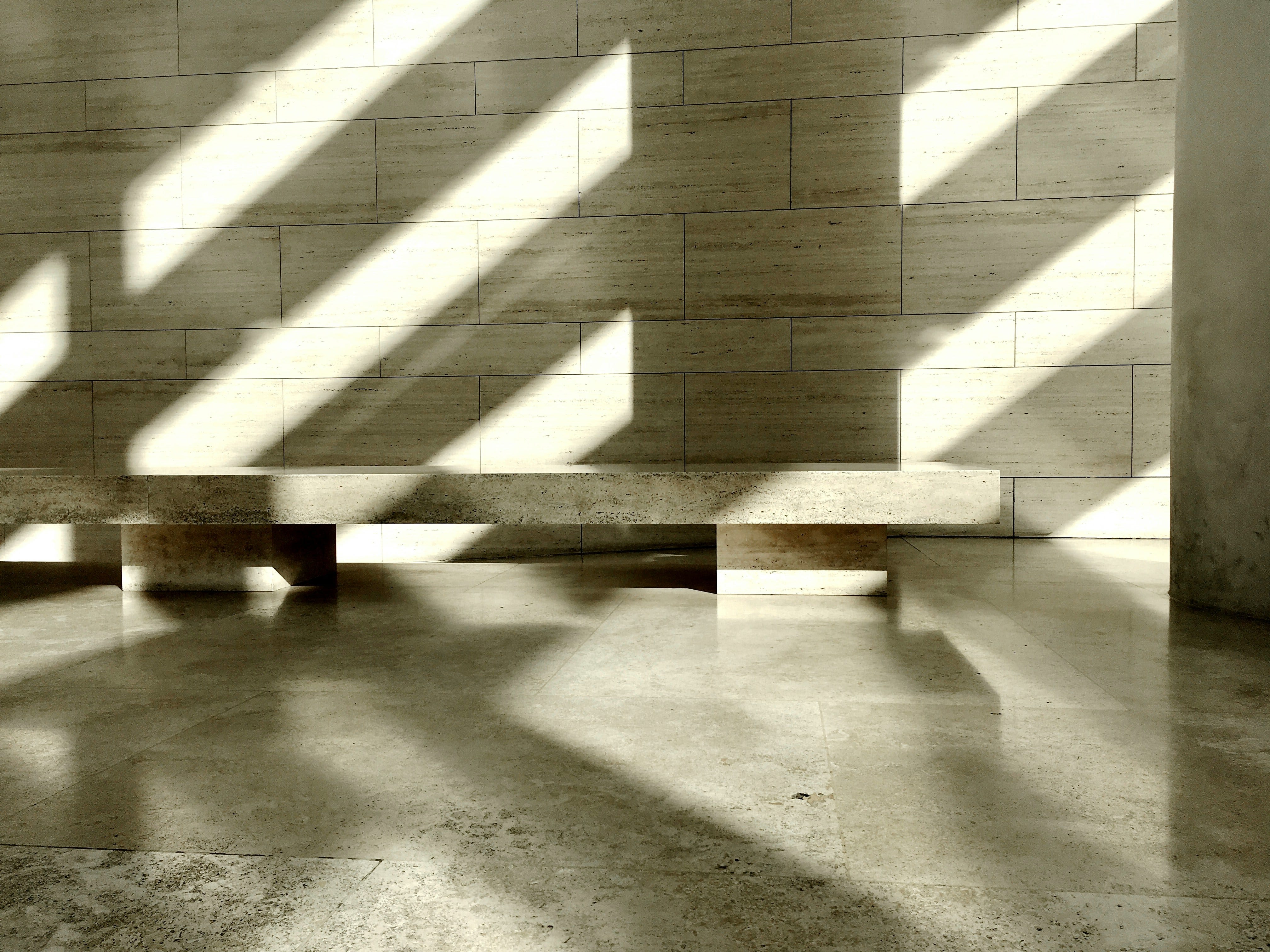
Material Note — Concrete feels grounding because it absorbs visual urgency rather than reflecting it.
- Coming next: Concrete as Quiet Authority.
THEN IT TELLS YOU HOW TO USE THE SPACE
Once the eye has somewhere to land, the room quietly tells the guest where to be. The seating at The Manner wraps the perimeter in long, continuous lines — generous, grounded, and unambiguous. There is no tension between what is beautiful and what is usable. A guest does not arrive to find themselves solving a puzzle of decorative furniture that cannot be touched.
They simply sit down.
This is the difference between a space designed to be photographed and one designed to be inhabited. For practitioners commissioning interiors in constrained, transient environments — where a guest may spend only minutes, clarity matters.
FROM THE NOTEBOOK
Field Note — Rooms feel calmer when the body understands where to go before the mind begins evaluating the space.
WHY IT FEELS LUXURIOUS
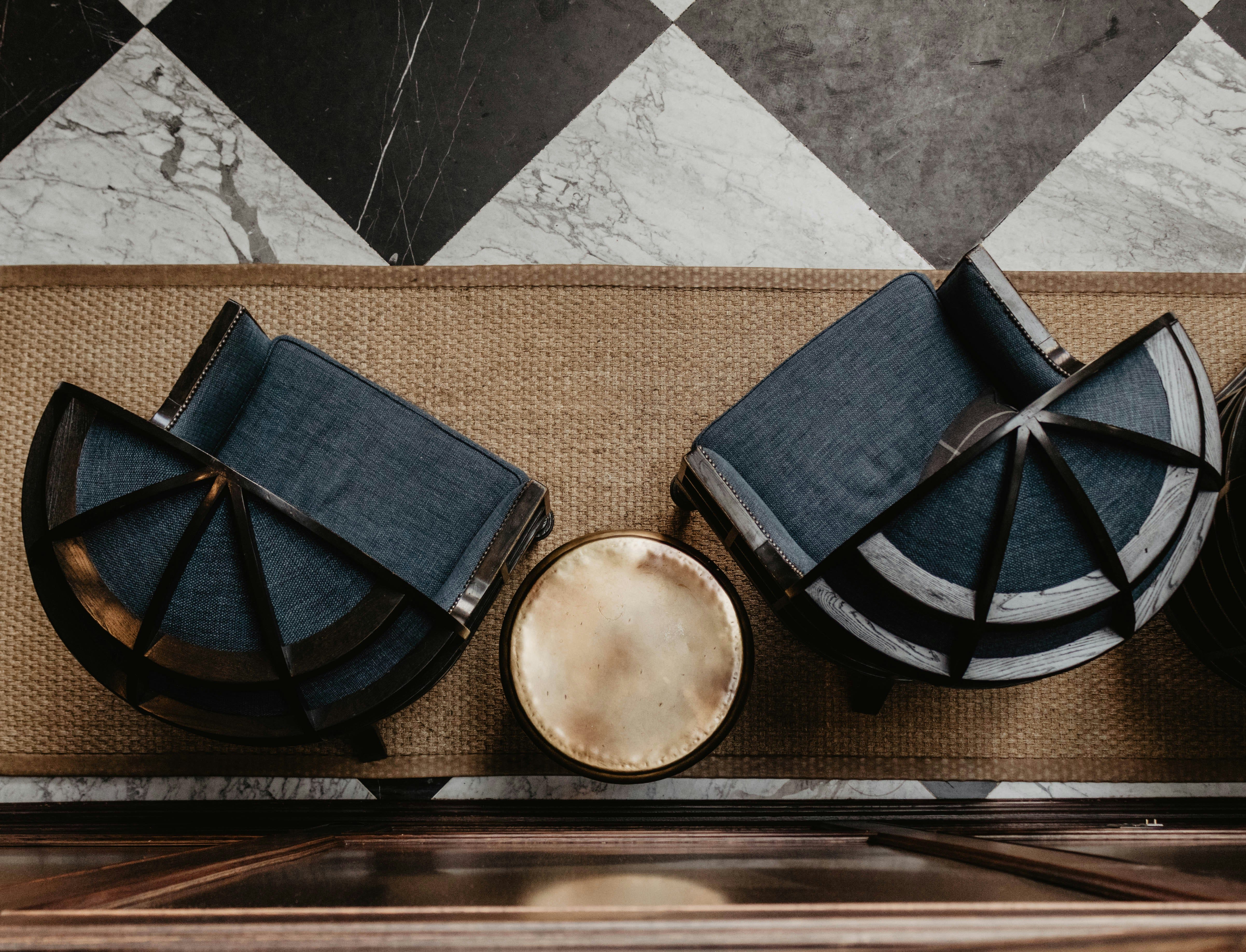
The most convincing luxury is achieved through restraint — and restraint is harder to specify than richness. Here, concrete feels calm rather than cold and brass appears in measured moments. Nothing competes and nothing begs for attention.
The room feels expensive because every element has been edited — and editing requires the discipline to remove the unnecessary. That discipline is what separates a beautiful mood board from an in tune interior.
THE HIDDEN GIFT: LESS MENTAL WORK
What the Manner does best is reduce cognitive load. A guest does not need to decode it. They do not need to decide where to sit, how the space works, or whether they are reading it correctly. They can simply arrive.
In hospitality and private travel settings, guests have spent considerable energy getting there. The environments that best welcome them are those that give some of that energy back — that lower the volume, reduce friction, and ask nothing of the person who has just walked in.
The room that lets you exhale is not an accident. It is the result of a hundred decisions made correctly.
FROM THE NOTEBOOK
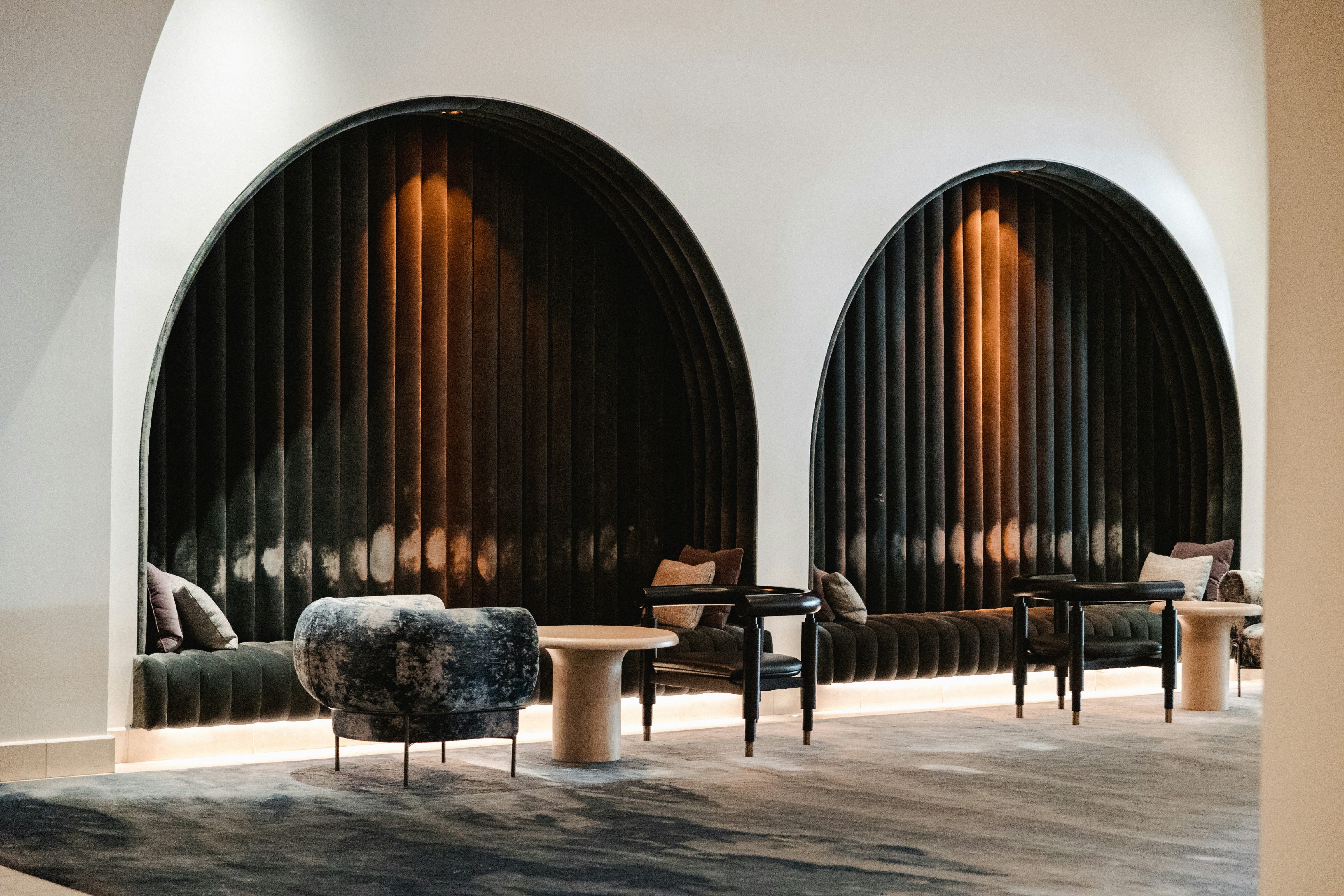
Field Note — Curved seating often feels psychologically safer because the body perceives enclosure before it consciously registers comfort.
THE PRINCIPLE
Define the essence before you design the environment. The room can only deliver a feeling its maker has already understood.
Essence first.
The Manner, New York — Hannes Peer Architecture