
The Art of Wandering
A Study of Discovery by Design
We tend to think of luxury as comfort, privacy, and access. Less intuitive, luxury is also about something else entirely: discovery.
Not discovery in the grand sense of adventure, but in the quiet moments that unfold over time. A path not yet taken or a view revealed from a different angle. It’s the kind of discovery that rewards curiosity—the kind that allows us to stumble upon something beautiful we weren’t even looking for.
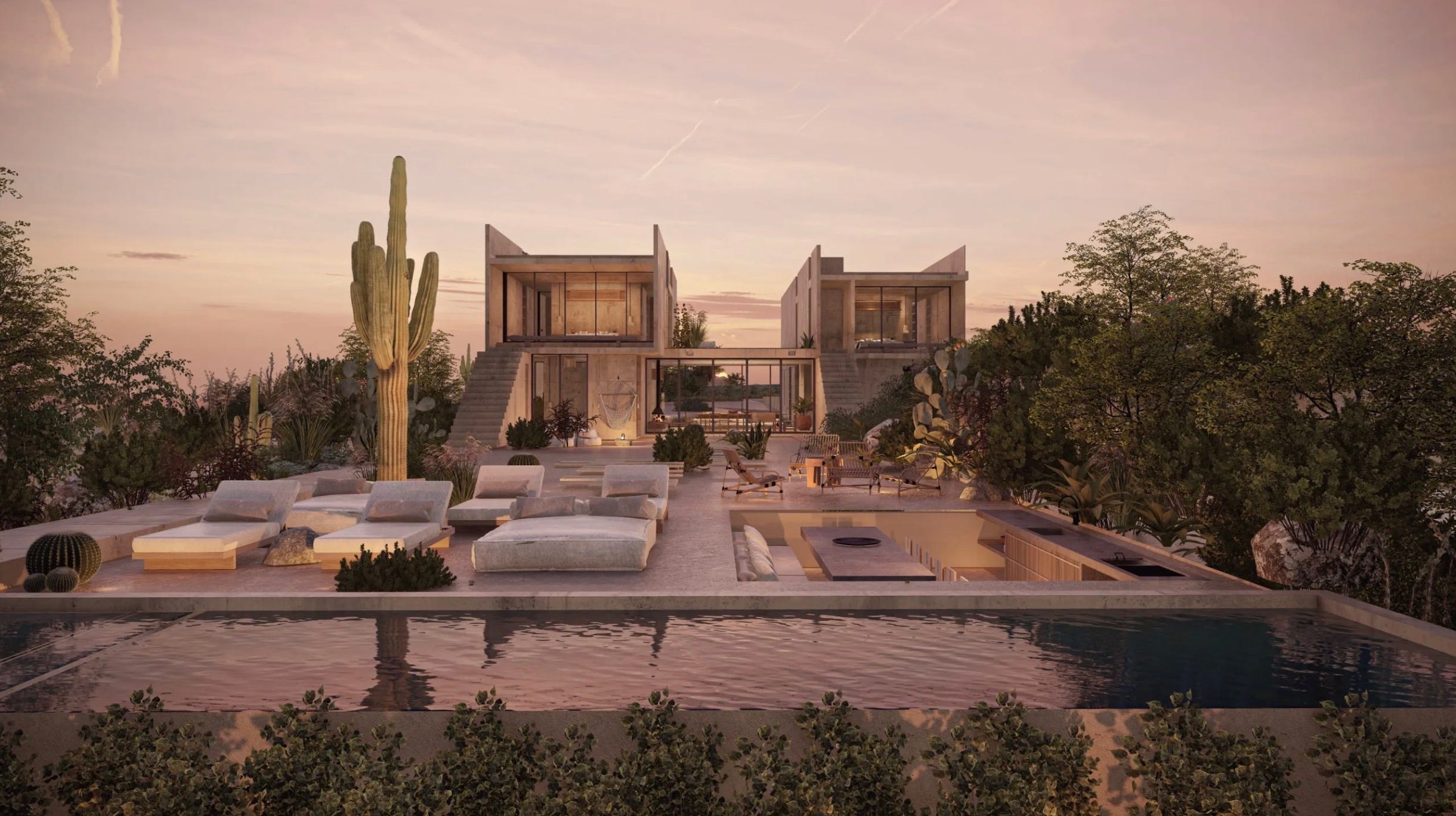
The private residences at Paradero in Todos Santos seem designed around that idea. Set within the desert landscape of Baja California Sur, the homes blur the boundary between architecture and terrain, creating a series of destinations rather than a single place to be. Even in a setting that becomes familiar, there is always another corner to explore.
Research suggests our brains are naturally drawn to discovery. Psychologist George Loewenstein's Information Gap Theory proposes that curiosity emerges when we sense there is something just beyond what we already know. New experiences, unexpected pathways, and moments of surprise create engagement because the mind is compelled to close the gap.
We are wired to wonder what lies beyond the next turn.
The result is a home that feels less like a structure and more like a landscape of discovery.
FROM THE NOTEBOOK
Field Note — The best spaces reveal themselves gradually, rewarding attention over time rather than demanding it all at once.
Designed to Unfold
Great gardens rarely reveal themselves at once. They unfold.
These homes seem to borrow from that same principle. A terrace gives way to a lounge. A pathway leads to a conversation pit and stairs invite you toward another perspective. There is no prescribed route and no singular destination.
Along the way, moments of refuge emerge from the landscape—a hammock suspended beneath the architecture, a shaded terrace, a chair positioned just far enough from the activity of the home.
The result is a space that rewards curiosity and leaves room for stillness.
FROM THE NOTEBOOK
Field Note — Not every destination should reveal itself immediately.
Places to Linger
Wandering is not simply movement. It’s also what happens when movement stops.
Throughout the property, moments of pause are woven into the experience. Sun loungers frame distant views. Seating areas emerge naturally from the landscape, while the sunken dining space transforms a simple meal into an occasion for connection.
Some of our most meaningful memories are created by conversations that linger long after the plates have been cleared.
FROM THE NOTEBOOK
Field Note — Some of the most memorable experiences are not designed into the itinerary. They are discovered along the way.
The Call to Nature
What ultimately makes these homes remarkable is not the architecture itself, but the relationship between architecture and landscape.
Rather than competing with the surrounding desert, the homes seem to participate in it. Gardens, terraces, rooftops, and pathways extend into the terrain, creating a seamless dialogue between built and natural environments.
The result is a home that never feels entirely contained. It invites movement. It encourages curiosity.
It reminds us that some of life’s greatest pleasures are not found in arriving, but in wandering.
THE PRINCIPLE
The most memorable spaces leave room for curiosity, allowing people to uncover a place rather than simply move through it.
Design for discovery.


