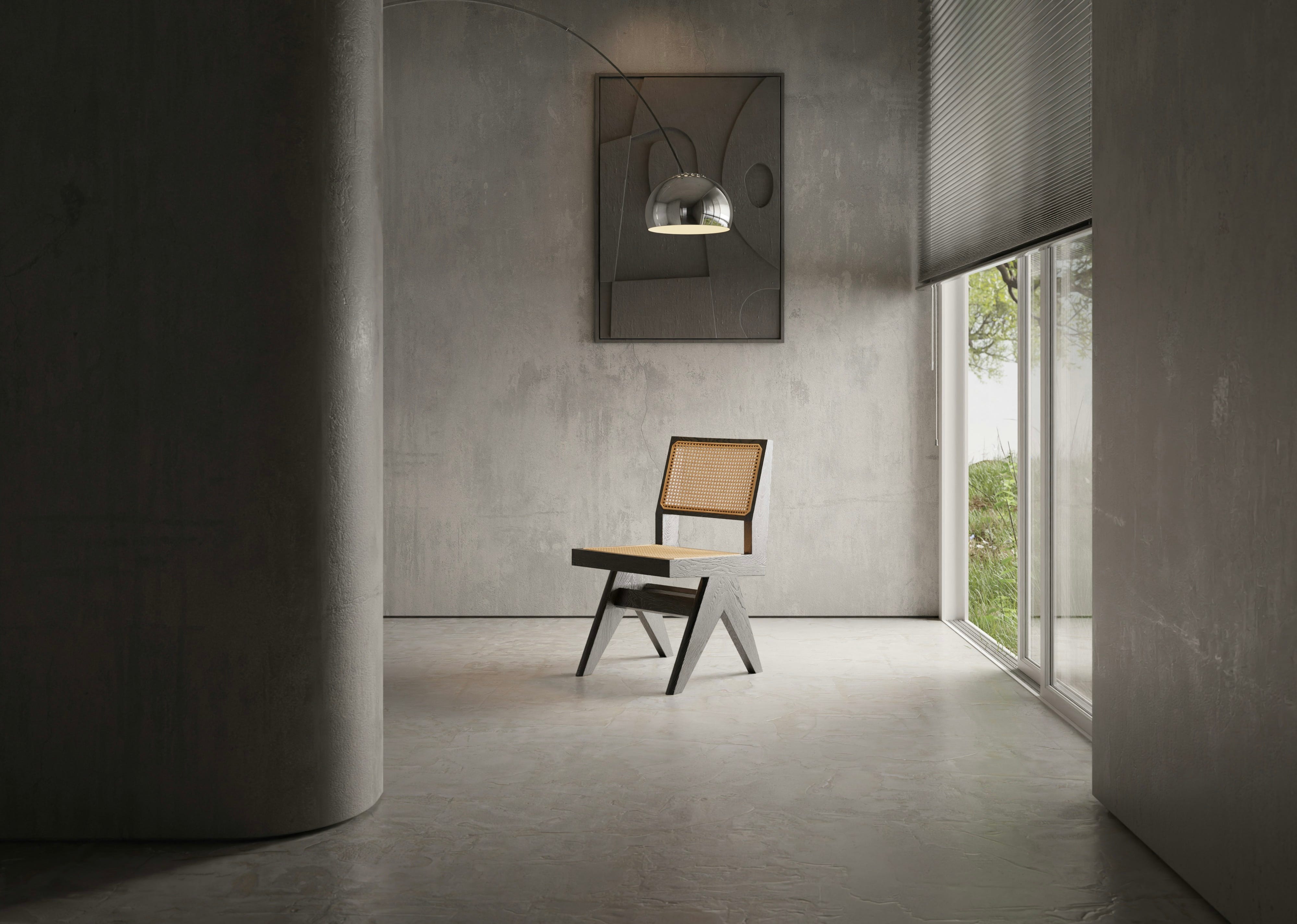
Concrete as Quiet Authority
Why matte materials calm the mind.
There’s a reason concrete continues to appear in some of the world’s calmest interiors. Not because it is trendy. And not because minimalism remains culturally popular.
Concrete, the texture, the color, the implication, changes the emotional rhythm of a room.
A recent study published in the peer-reviewed journal Buildings found that concrete environments were associated with cognitive functioning, emotional stability, and rational thinking. Perhaps this helps explain concrete’s enduring appeal: it creates the conditions for clarity.
THE PSYCHOLOGY OF MATTE GRAY
The color of concrete matters too.
Studies surrounding environmental perception consistently associate muted neutrals and earth-derived tones with calm, restraint, and stability. Warm matte grays in particular tend to feel grounding, while cooler glossy grays can quickly drift toward sterile or institutional.
Concrete works best when it feels softened by light, texture, and scale — when it behaves less like industrial finish and more like weathered stone or packed earth. The result feels grounded, restrained, and quietly permanent.
And what emerges from that restraint is often interpreted as luxury.
Not loud luxury. Quiet authority.
FROM THE NOTEBOOK
Material Note — Matte materials feel quieter because they return less information to the eye.
WHY IT WORKS
Concrete also feels familiar because it echoes materials humans have encountered for millennia: stone, earth, weathered textures, and mineral surfaces. Especially when imperfectly finished, it carries a visual language that feels grounded rather than manufactured.
The calming effect is not exclusive to concrete itself. What feels grounding is often the visual behavior associated with concrete: low reflectivity, tonal restraint, softened texture, and visual weight.
That is why materials like Roman clay, matte limestone, weathered oak, and chalky textiles can create many of the same emotional effects. The brain responds less to the label of a material and more to the sensory information it provides.
FROM THE NOTEBOOK
Field Note — Materials that absorb shadow often feel calmer than those that reflect light back into the room.
THE NEW LUXURY OF RESTRAINT
Some materials energize a room. Others steady it.
Concrete belongs to the second category.
Its visual weight, muted tone, and matte surface create a sense of grounding within a space. It doesn’t compete for attention or ask the eye to keep working. Instead, it reduces visual demand and gives the room a quieter rhythm.
That feeling matters more than ever in environments where people already arrive overstimulated and mentally tired — hotels, lounges, wellness spaces, and homes intended for recovery rather than display. The most memorable hospitality environments are designed not to stimulate the senses, but to calm them.
Increasingly, the spaces that feel most luxurious are the ones that return something to the nervous system.
THE PRINCIPLE
A calming environment is rarely the result of silence alone. More often, it is the result of visual restraint.
The surfaces that ground us tend to share the same quiet behavior: they absorb more than they announce.
Not loud luxury.
Clarity.